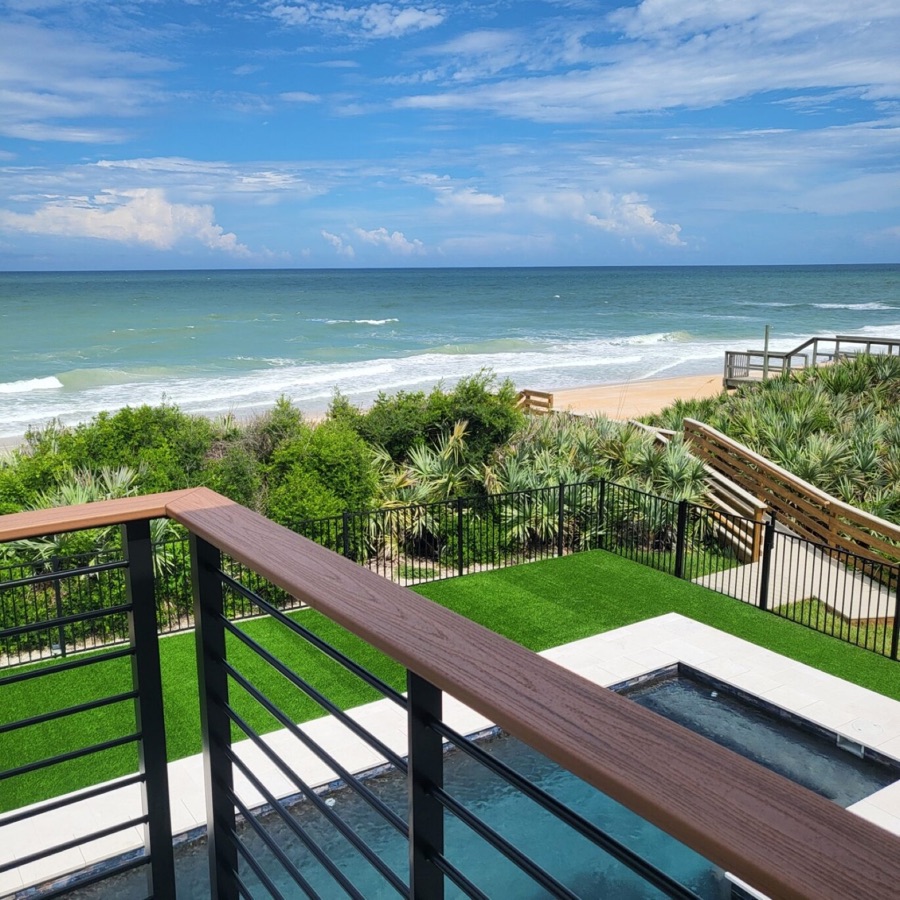
Make the rental dark from the beach
Stand outside after dark and look toward the home from the sand only where safe and legal. If interior or exterior light is visible, reduce it without compromising essential human safety.
Amber or long-wavelength bulbs help only when fixtures are also mounted low and fully shielded. The practical goal is to keep artificial light from reaching the nesting beach.
- Close blinds and curtains facing the ocean
- Turn off balcony and decorative lights
- Move lamps away from windows
- Use approved amber or long-wavelength lighting where required
- Never aim a flashlight or phone light toward the beach
Clear the turtle's path every evening
Pack up before dark rather than leaving furniture for the next morning. Small objects and holes can become serious barriers to adults and hatchlings.
A clean shoreline also reduces entanglement and discourages raccoons, crows, and other predators that may be drawn to food scraps.
- Remove chairs, umbrellas, toys, tents, and coolers
- Fill holes and flatten large sand structures
- Take all trash and food scraps
- Keep clear of marked nest boundaries
- Use only approved walkovers across the dunes
Know when to call for help
Do not carry a hatchling to the water, dig into a nest, or attempt to rescue a turtle. Trained responders need the location and a calm description of what is happening.
Watch from a distance while making the call. Keep other people, pets, and lights away without touching the turtle or changing its path.
- Report a distressed, injured, entangled, or dead turtle
- Report a hatchling in a road, parking lot, or moving inland
- Report anyone touching or disturbing a nest or turtle
- FWC Wildlife Alert: 888-404-FWCC (3922)
- Mobile option: *FWC
Make it easy
A turtle-safe evening
- Step 1Clear the beach
Before sunset, remove every item, fill holes, collect trash, and return by an approved walkover.
- Step 2Darken the home
Close ocean-facing curtains and switch off unnecessary indoor and outdoor lights.
- Step 3Observe, never intervene
If turtles appear, stay back, remain dark and quiet, and call FWC when trained help is needed.
Check before leaving
Practical details.
- Close every ocean-facing curtain or blind after dark.
- Switch off unnecessary balcony and exterior lights.
- Remove every chair, toy, tent, and cooler from the sand.
- Fill holes and take all trash before sunset.
- Save the FWC Wildlife Alert number: 888-404-3922.
Primary sources
Verify the live details.
Hours, prices, access, weather and closures can change. These official or first-party sources were reviewed on September 17, 2026.
Quick answers
Common questions.
Can I use a red flashlight to watch turtles?
The safest visitor practice is no light. Do not shine any light on a turtle or hatchling; even wildlife-friendly property lighting is not permission to illuminate animals.
Should I move a hatchling toward the ocean?
No. Keep lights off, watch from a distance, and let it crawl naturally. Call FWC if it is moving inland, in a road or parking lot, injured, or otherwise in danger.
Are beach fires allowed during turtle season?
No. Flagler Beach prohibits beach fires from May 1 through October 31. Outside that period, separate permit rules apply.
Send it your way before the trip.